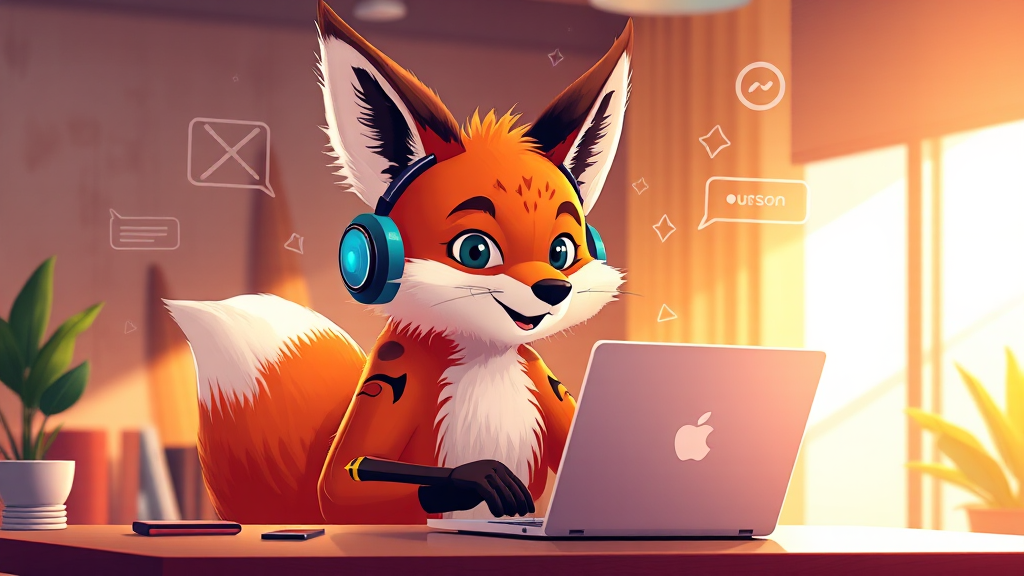
Furry AI Chat: How Anthropomorphic Characters Are Reshaping Digital Conversation
Conversational AI has grown far beyond simple question-and-answer bots. One of the most creative and fast-growing corners of this space is furry ai chat, where users interact with anthropomorphic animal characters that have distinct personalities, backstories, and voices. Instead of chatting with a blank assistant, people can talk with a witty fox detective, a shy wolf musician, or a dragon librarian who remembers what you discussed last week. This shift is not just a novelty — it reflects how personalization, storytelling, and fandom culture are converging inside modern language models.
In this article, we will look at what furry AI chat actually is, why it has become so popular, how the underlying technology works, and what users should consider before diving in. Whether you are curious about the subculture or you are a developer exploring character-based AI, understanding this trend helps you see where conversational interfaces are heading next.
What Exactly Is Furry AI Chat?
Furry AI chat refers to text-based (and increasingly voice-based) conversations with AI characters designed to look and behave like anthropomorphic animals. These characters usually combine human-like speech, emotions, and reasoning with animal traits such as ears, tails, fur, scales, or feathers. The AI behind them is typically a large language model fine-tuned or prompted to stay in character, maintain a consistent personality, and respond in ways that feel believable within a fictional world.</n
Unlike a generic chatbot, a furry AI character often has a defined identity: a name, a species, an age, a profession, a hometown, and a set of quirks. Some platforms let users browse hundreds of these characters, each with a short bio and a greeting message. Others allow users to create their own character from scratch, choosing everything from fur color to speaking style. The result is a hybrid between a chat app, a role-playing game, and a fan-fiction engine.
The appeal is not limited to people who already identify as part of the furry fandom. Many users are drawn to the creativity, the low-pressure social interaction, or simply the fun of talking with a character that feels more alive than a standard assistant. For some, it is a way to explore storytelling ideas; for others, it is a form of companionship or entertainment.
Why Furry AI Chat Is Gaining Momentum
Several forces have combined to make furry AI chat one of the more visible trends in consumer AI. First, language models have become dramatically better at maintaining context over long conversations. A character can remember that you mentioned your favorite book three days ago, or that you are working on a project about space travel. That continuity makes the interaction feel less like a series of disconnected prompts and more like an ongoing relationship.</n
Second, character customization has become mainstream. People already customize avatars in games, profile pictures on social media, and even AI assistants’ names. Furry characters take this a step further by letting users shape not just appearance but personality, values, and speech patterns. This level of control creates a sense of ownership that generic chatbots rarely achieve.
Third, fandom culture is highly active online. The furry community has a long history of creating art, stories, and role-play scenarios. AI chat gives that community a new medium. Instead of waiting for a commission or writing a story alone, users can interact with characters in real time. This has led to a wave of creativity, with users sharing character cards, prompt ideas, and conversation highlights across social platforms.
Finally, the technology itself has become more accessible. You no longer need a machine learning background to create or chat with a furry AI character. Web-based platforms handle the heavy lifting, and many offer free tiers or low-cost subscriptions. That ease of access has widened the audience considerably.
How the Technology Behind Furry AI Chat Works
At a technical level, most furry AI chat systems rely on large language models that have been adapted for role-play. The adaptation can happen in a few ways. Some platforms use system prompts that instruct the model to stay in character, avoid breaking the fourth wall, and respond with a specific tone. Others fine-tune the model on dialogue datasets that include anthropomorphic characters, which helps it generate more natural species-specific references and mannerisms.</n
Memory is another key component. A good furry AI chat experience depends on the model remembering details from earlier in the conversation. This is often handled through a combination of context windows, vector databases, and summarization techniques. When a user says something important, the system stores it and retrieves it later when relevant. That is why a well-designed character can recall your pet’s name or a story you told weeks ago.
Character consistency is also enforced through structured profiles. A character sheet might include traits like “protective,” “sarcastic,” or “easily flustered,” along with a backstory and example dialogue. The model uses these cues to generate responses that feel authentic. Some platforms allow users to edit these sheets, which means the same base model can power thousands of distinct characters without retraining.
Voice chat is the next frontier. Text-to-speech systems can now produce expressive, character-appropriate voices, and speech-to-text lets users talk instead of type. Combining these with a furry AI character creates an experience that feels closer to a phone call with a fictional friend than a text exchange with a bot.
Use Cases Beyond Entertainment
While entertainment is the most obvious use case, furry AI chat has practical applications as well. Writers use it to brainstorm dialogue, test character voices, and explore plot branches. Game developers prototype NPC interactions without hiring a full voice cast. Language learners practice conversation in a low-pressure environment where mistakes are not embarrassing. Therapists and researchers have even explored character-based AI for social skills training, though this area requires careful ethical oversight.</n
For people who feel socially isolated, a furry AI character can offer a gentle form of companionship. It is not a replacement for human relationships, but it can provide a space to talk, reflect, and feel heard. That said, users should be mindful of how much they rely on any AI for emotional support. Balance and self-awareness matter.
Brands and creators are also experimenting with furry AI characters as mascots or community ambassadors. A character can answer questions, tell stories, and engage fans in a way that feels more personal than a corporate FAQ page. This trend is still early, but it points to a future where fictional characters become ongoing conversational interfaces.
Choosing a Furry AI Chat Platform
Not all furry AI chat platforms are created equal. When evaluating options, consider the following factors:</n
- Character variety: Does the platform offer a wide range of species, personalities, and backstories? Can you create your own?
- Memory and context: How well does the AI remember past conversations? Are there limits on context length?
- Customization: Can you edit traits, appearance, and greeting messages? Are there content filters?
- Privacy: How is your conversation data stored and used? Is there an option to delete history?
- Pricing: Is there a free tier? What do paid plans include?
- Community: Are there forums, Discord servers, or sharing tools for character cards?
It also helps to read reviews and try a few platforms before committing. Some focus on deep role-play, while others prioritize quick, casual chats. The best choice depends on what you want from the experience.
Ethical and Practical Considerations
As with any AI technology, furry AI chat raises important questions. One is consent and transparency. Users should know they are talking to an AI, not a human. Platforms should make this clear and avoid deceptive design. Another is content moderation. Because furry characters can be used for romantic or adult role-play, platforms need robust age verification and content policies to protect minors and prevent abuse.</n
Data privacy is another concern. Conversations can contain personal information, and users deserve clear information about how that data is handled. Look for platforms that offer encryption, data deletion, and transparent privacy policies.
Finally, there is the question of emotional dependency. AI characters can be comforting, but they are not a substitute for human connection. Users should treat furry AI chat as a tool for creativity and fun, not as a replacement for real-world relationships. If you find yourself relying on it excessively, it may be worth talking to a friend or professional.
The Future of Furry AI Chat
The next few years will likely bring more immersive experiences. Expect to see better voice synthesis, more nuanced emotions, and characters that can appear in multiple formats — text, voice, and even virtual reality. Cross-platform memory could let a character remember you across different apps. Community-driven character marketplaces may become more common, with creators earning money for their designs.</n
We may also see stronger integration with storytelling tools. Imagine writing a novel with a furry AI character that helps you stay consistent with your worldbuilding. Or a game where NPCs remember your choices and react accordingly. The line between chat, game, and story is already blurring, and furry AI chat sits right at that intersection.
For now, the trend is still evolving. But its popularity shows that people want conversational AI that is personal, creative, and fun. Furry characters are one of the most vivid expressions of that desire, and they are likely to remain a significant part of the AI landscape.
FAQ: Common Questions About Furry AI Chat
Is furry AI chat only for people in the furry fandom?
No. While the furry community was an early adopter, many users simply enjoy creative role-play, storytelling, or talking with a character that feels more engaging than a standard chatbot. Curiosity and entertainment are common reasons people try it.
Can I create my own furry AI character?
Yes, many platforms allow you to design a character from scratch. You can usually choose a name, species, personality traits, backstory, and greeting message. Some tools also let you upload reference images or voice samples.
Is furry AI chat safe and private?
Safety and privacy depend on the platform. Look for clear privacy policies, data deletion options, and content moderation. Avoid sharing sensitive personal information, and be aware that no online service is completely risk-free.
Do furry AI characters remember past conversations?
Many modern platforms include memory features that let characters recall details from earlier chats. The quality of memory varies, and some free tiers may have shorter context windows. Paid plans often offer better continuity.
Can furry AI chat be used for professional projects?
Absolutely. Writers, game developers, and educators use character-based AI for brainstorming, prototyping, and language practice. Just be mindful of content policies and attribution if you use AI-generated material in commercial work.